Anhad Flute · Rishikesh, Uttarakhand
Bansuri Flute Classes in Rishikesh, near Tapovan & Laxman Jhula
Learn the Indian bamboo flute with Kamal Negi at Artshala, Rishikesh Pottery Studio. Correct blowing technique, easy fingering, breath control and raag basics — taught with a filmmaker's ear for rhythm and feeling.
Curriculum
What You'll Learn
Blowing Technique
Correct embouchure and airflow — the foundation of a clean, resonant tone.
Fingering Methods
Easy, structured fingering drills that build muscle memory fast.
Breath Control
Exercises for sustained, steady breath — the source of a mature sound.
Raag & Improvisation
Raag basics that open the door to real, expressive improvisation.
Class Formats
Learn the Way That Fits You
1-on-1
Personal, in-person sessions at Artshala, Rishikesh Pottery Studio — paced entirely to you.
Group Classes
Learn alongside fellow students — a shared, motivating rhythm of practice.
Online
Live video-call lessons for students learning from outside Rishikesh.
Why Here
Why Rishikesh Is the Right Place to Learn Flute
Rishikesh has been pulling people toward stillness for longer than almost anywhere else on earth. The Ganga runs through it, the Himalayan foothills rise around it, and thousands of people arrive every year already looking for exactly what the bansuri offers — a way to slow the breath down and mean it.
That's not something you can manufacture in a city studio. Practicing breath control with the river audible through the window changes how fast the instrument gets under your skin. Most students who take flute classes in Rishikesh say the place did half the teaching before the lessons even began.
It also means you're never learning in isolation. Rishikesh is full of musicians, yoga teachers, and fellow travelers chasing the same kind of quiet — exactly the environment where daily practice happens without ever feeling like discipline.
Common Struggles
Why Most Beginners Get Stuck — and How to Get Past It
Almost every self-taught flute player hits the same four walls. None of them mean you lack talent — they mean nobody's corrected the small thing yet.
The Problem
"I can't get any sound out of it"
Almost never a lung problem — it's embouchure. A few minutes of correction fixes what weeks of guessing alone can't.
The Problem
"I run out of breath after four notes"
Untrained breath support runs out fast. Structured breathing drills fix this before it hardens into a habit.
The Problem
"My notes sound flat, sharp, or 'off'"
Usually a finger-seal or angle issue, not a bad ear. A trained eye catches it instantly — a mirror never will.
The Problem
"I've plateaued learning alone"
Videos get you the basics. They rarely get you past them — raag and improvisation are traditionally taught ear-to-ear, not screen-to-ear.
Studio
Artshala, Rishikesh Pottery Studio, Rishikesh
Classes are held at Artshala, Rishikesh Pottery Studio, Rishikesh — easily reachable from Tapovan and Laxman Jhula. Anhad Flute proudly serves students across Rishikesh, Tapovan and Laxman Jhula, in person and online.
View on GoogleFlute Classes in Tapovan
A short walk from Tapovan's guesthouses and yoga shalas, Artshala fits naturally into a morning routine — arrive after asana, leave with a new breath practice.
Flute Classes Near Laxman Jhula
Just across the river from Laxman Jhula, the studio is an easy walk over the bridge — many students pair a flute class with an evening at the ghats.
Flute Classes Across Rishikesh
Centrally reachable by auto or on foot from anywhere in Rishikesh, with live online lessons available for students staying further out.
Gallery
From the Studio
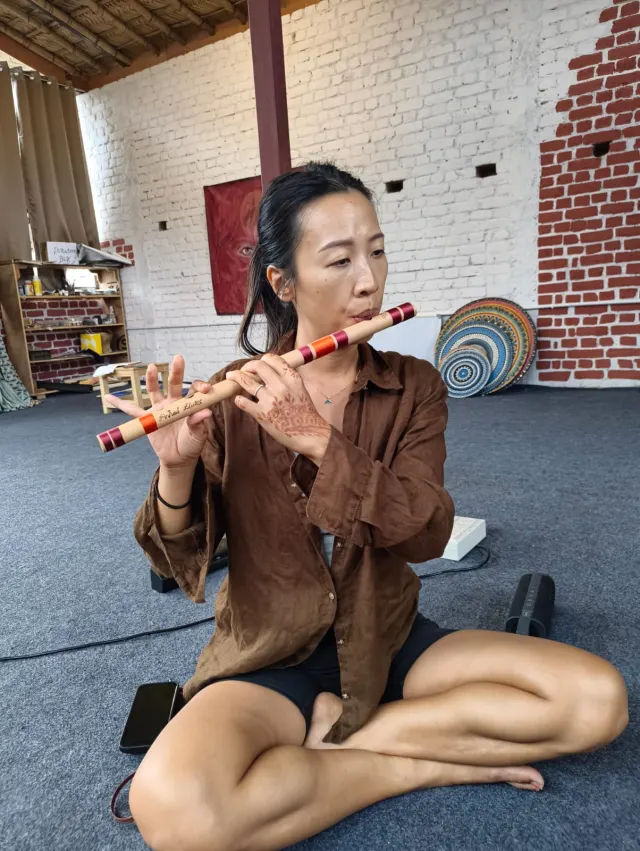
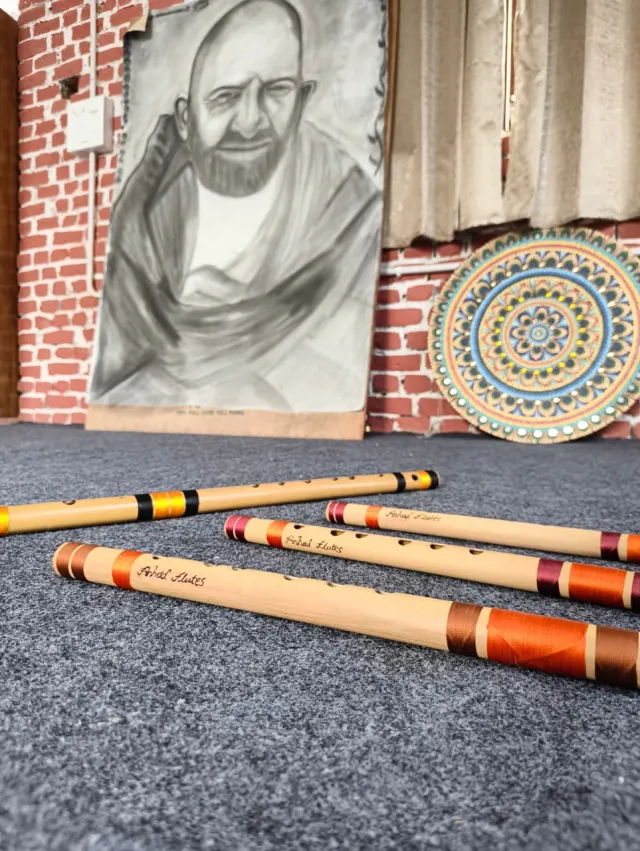
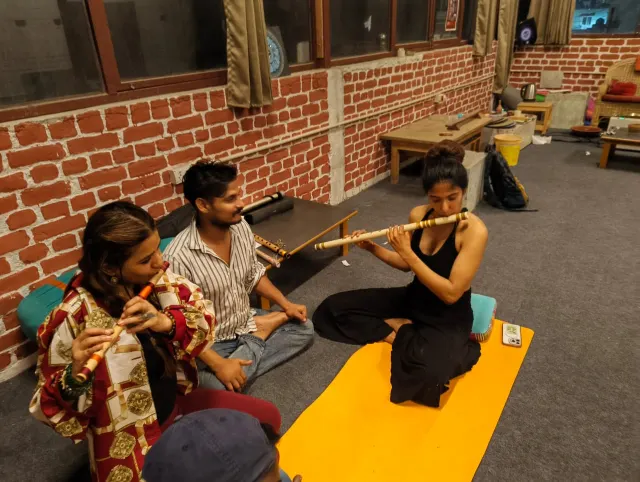
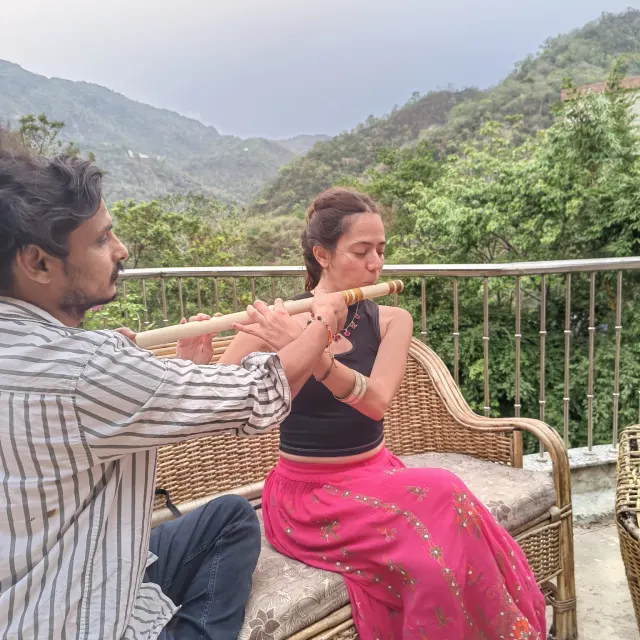
Profile / 01
Kamal
Negi
"I teach flute the way I once cut film — for rhythm, for breath, for the feeling underneath the notes."
Kamal Negi is a flute (bansuri) teacher and artist based in Rishikesh, with four years of experience in film production and music work before turning to full-time teaching. That background in film — understanding sound, rhythm, and storytelling — now shapes the way he teaches: clear, structured, and grounded in real musical feeling rather than rote repetition.
His teaching centers on four pillars: correct blowing technique, easy fingering methods, breath control, and raag basics leading into improvisation. The goal for every student is the same — to play the flute with confidence, purity of sound, and genuine musical expression.
FAQ
Common Questions
Where are Anhad Flute classes held?
Classes are held at Artshala, Rishikesh Pottery Studio, easily reachable from Tapovan and Laxman Jhula. Online classes are also available for students outside Rishikesh.
Do you offer online flute classes?
Yes. Alongside in-person 1-on-1 and group classes at Artshala, Rishikesh Pottery Studio, Anhad Flute offers live online bansuri lessons for students outside Rishikesh.
Is bansuri suitable for complete beginners?
Yes. Kamal Negi's teaching starts with correct blowing technique and breath control before moving to fingering and raag basics, so complete beginners can start with no prior musical experience.
How do I book a flute class in Rishikesh?
The fastest way to book is via WhatsApp — send a message with your city and preferred class format (1-on-1, group, or online) to get started.
Why Flute
The flute doesn't just teach you music. It teaches you to breathe again.
Before it's a raag, before it's even a scale, the bansuri is one long, honest breath. You cannot rush it, force it, or fake it — the flute only speaks when you slow down enough to actually breathe. That's the first thing most students notice: within a few sessions, their breathing changes everywhere, not just when they're holding the flute.
Then it starts working on the rest of you. The fingers learn patience. The ear learns to listen before it plays. A mind that's used to being everywhere at once learns to sit inside a single note until it's ready to move to the next. Students who come to Rishikesh for yoga, for stillness, for a reset, often say the flute gave them what the rest of the trip was pointing toward — a way to carry that stillness home.
This is what "Anhad" means: the sound that exists before anything strikes it. Not performance. Not perfection. Just breath, shaped into music. Every beginner who picks up a bansuri at Artshala, Rishikesh Pottery Studio starts here — not trying to sound good, just trying to breathe well. The music follows.
"Kamal explains every technique so clearly — my breath control and tone improved more in a few weeks than in a year of practicing alone."
— Student, Rishikesh
The Tradition
The Bansuri in Hindustani Classical Music
The bansuri is one of the oldest instruments in Indian classical music, central to Hindustani classical music alongside the sitar, tabla, and voice. Where Carnatic music in South India has its own flute tradition, the North Indian bansuri used at Anhad Flute is built for the long, breath-driven phrasing of Hindustani raag — closer in spirit to vocal music than to Western flute technique.
Every raag you learn — Yaman, Bhairav, Bhupali, and beyond — comes from a shared classical framework of sargam (Sa, Re, Ga, Ma, Pa, Dha, Ni), taal (rhythmic cycle), and improvisation passed down through the guru-shishya tradition. Learning bansuri is, in that sense, learning to speak a language that classical vocalists, sitar players, and tabla players all share.
Compared to the Western concert flute, the bansuri is unkeyed — every semitone, slide, and ornament (meend) is shaped by the fingers and breath alone, which is what gives Indian classical flute music its distinctive glide between notes. It's also why bansuri technique and breath control take longer to master than beginners expect, and why structured lessons matter more here than on most instruments.
Students at Anhad Flute learn bansuri the traditional way — by ear, through repetition and correction, not sheet music — while also picking up enough sargam notation to practice independently. Whether your goal is classical performance, meditative solo practice, or simply learning flute for personal joy, the foundation is the same: breath, raag, and patience.